
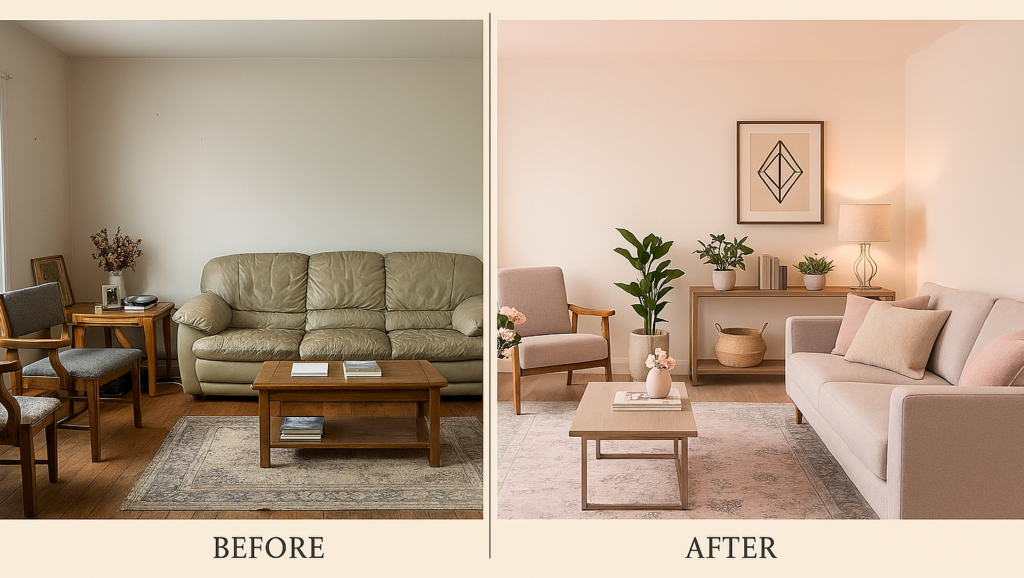
Home staging can dramatically transform a property’s appeal, helping potential buyers visualize themselves living in the space. In “before” scenarios, rooms often appear cluttered, outdated, or too personalized, making it harder for buyers to connect emotionally.
After staging, these same spaces are decluttered, neutrally styled, and strategically arranged to highlight the home’s best features—such as natural light, layout, and functionality.
🏠 ATTENTION! 🏠 Spots fill fast — claim your FREE Home Organization consultation with our experts 📞Contact us NOW!
For example, a small living room might initially feel cramped due to oversized furniture and dark décor. After staging, lighter tones, well-proportioned furniture, and thoughtful placement can make the space look larger and more inviting. Similarly, bedrooms that once looked plain or overly personalized are transformed with fresh linens, minimal décor, and cohesive color schemes that create a calming, hotel-like atmosphere.
These transformations are powerful because they address a key buyer challenge: imagination. Many buyers struggle to see past imperfections or empty spaces. “After” staging photos bridge that gap, presenting a polished, move-in-ready vision that increases interest, showings, and ultimately offers.
How Much Does Home Staging Cost vs. Value Added

Home staging costs can vary widely depending on the size of the property, the level of staging required, and whether it’s partial or full-service staging. On average, homeowners might spend anywhere from a few hundred dollars for DIY staging to several thousand for professional services. While this upfront investment may seem significant, it’s important to compare it with the potential return on investment (ROI).
Staged homes often sell faster and for a higher price compared to non-staged properties. Even a modest increase in sale price can outweigh staging costs.
For instance, enhancing a home’s visual appeal can create competitive bidding situations, especially in markets where buyers are influenced by strong first impressions and online listings.
Speed cleaning tips professional cleaners 🏠
Additionally, staged homes tend to spend less time on the market, which can reduce carrying costs such as mortgage payments, utilities, and taxes. When viewed from a financial perspective, home staging is not just an expense—it’s a strategic investment that can maximize profit while minimizing time and stress during the selling process.
Virtual Staging vs. Real Staging
Virtual staging has become an increasingly popular alternative to traditional staging, especially in today’s digital-first real estate landscape. With virtual staging, designers use software to add furniture and décor to photos of empty rooms. This method is typically more affordable and faster than physical staging, making it an attractive option for sellers on a budget.
However, real (physical) staging offers a tangible experience that virtual staging cannot replicate. When buyers visit a home in person, physically staged spaces allow them to experience scale, layout, and ambiance more realistically. This can create a stronger emotional connection and often leads to better engagement during showings.
Ultimately, the choice between virtual and real staging depends on your goals, budget, and market conditions. Virtual staging works well for online listings and vacant homes, while real staging is ideal when in-person impressions are critical. In many cases, combining both strategies can deliver the best results—capturing attention online and confirming value during walkthroughs.