
A sparkling bathroom doesn’t just look good—it helps reduce germs, odors, soap scum, and mildew buildup that can damage surfaces over time. This step-by-step bathroom cleaning guide walks you through a smart sequence, pro techniques, eco-friendly options, and time-saving tips. Whether you’re doing a weekly refresh or a monthly deep clean, you’ll find practical advice you can use right away.
Below, you’ll find sections using your requested keywords as headers. Each section includes multiple paragraphs with detailed, actionable guidance.
Best Way to Clean a Bathroom
The best way to clean a bathroom is to work from top to bottom and from dry to wet. Start by removing clutter, laundering towels and mats, emptying the trash, and dusting vents, lights, and baseboards.
Do you need someone to clean for you? Let’s talk!

Then, move to mirrors and glass, followed by counters, sinks, and fixtures. Finish with the toilet, tub/shower, and finally the floor. This order prevents re-contaminating freshly cleaned areas and stops drips or dust from messing up your progress.
Set yourself up for success by creating a staging area just outside the bathroom with all your tools: microfiber cloths, a glass cloth, sponge or non-scratch scrub pad, toilet brush, grout brush or old toothbrush, bucket, and mop. For products, choose a mild all-purpose bathroom cleaner (or a DIY mix of water + a few drops of dish soap), a disinfectant (for high-touch surfaces like the toilet flush handle), a glass cleaner or vinegar-water for mirrors, and a scale remover for hard water stains if needed. Keep gloves on hand to protect your skin.
Work in zones and set timers. For example, spray the shower walls and door first so the cleaner can dwell while you handle mirrors and the sink. Dwell time (usually 3–10 minutes) lets chemistry do the heavy lifting, so you scrub less. For homes with hard water, pretreat faucets and glass to loosen mineral deposits before wiping. Consistency matters: a 15–20 minute weekly routine dramatically cuts down how often you’ll need heavy scrubbing.
Bathroom Cleaning Checklist
Preparation
- Remove all items from counters, tub/shower shelves, and the back of the toilet. Shake out bathmats; start a load of towels if needed. Open a window or run the exhaust fan for ventilation.
- Gather supplies: gloves, microfiber cloths (color-code for hygiene: one for glass, one for sink/counters, one for toilet exterior), toilet brush, non-scratch scrub pad, grout brush, all-purpose cleaner, glass cleaner or vinegar solution, disinfectant, descaler for hard water, mop, and bucket.
- Dust high areas: ceiling corners, light fixtures, vents, tops of mirrors and frames, door frames, and baseboards. Dry dusting first prevents streaks and sludge.
Clean & Disinfect
- Mirrors & Glass: Spray lightly with glass cleaner (or 1:1 white vinegar and water). Wipe in overlapping passes with a lint-free cloth, finishing with vertical strokes.
- Counters & Sink: Apply cleaner, allow dwell time, scrub around the drain and faucet base, rinse, and buff dry to prevent water spots.
- Toilet: Clean exterior first (handle, tank, lid, seat undersides), then bowl with toilet-specific cleaner; brush under the rim and in the S-trap. Let disinfectant sit as directed.
- Tub & Shower: Apply bathroom cleaner or a soap scum remover to walls, door/curtain, and fixtures. Scrub grout lines and corners; rinse thoroughly and squeegee if possible.
Floors & Finishing
- Sweep or vacuum the floor, including behind the toilet and under the vanity edge. Spot-treat stains.
- Mop starting farthest from the door, working your way out. Use a bathroom-safe floor cleaner (check surface compatibility for tile, vinyl, or stone).
- Replace items: wipe product bottles before putting them back, swap in fresh towels, and empty the trash. Finish by running the fan for 10–15 minutes to dry surfaces.
Deep Clean Bathroom Guide
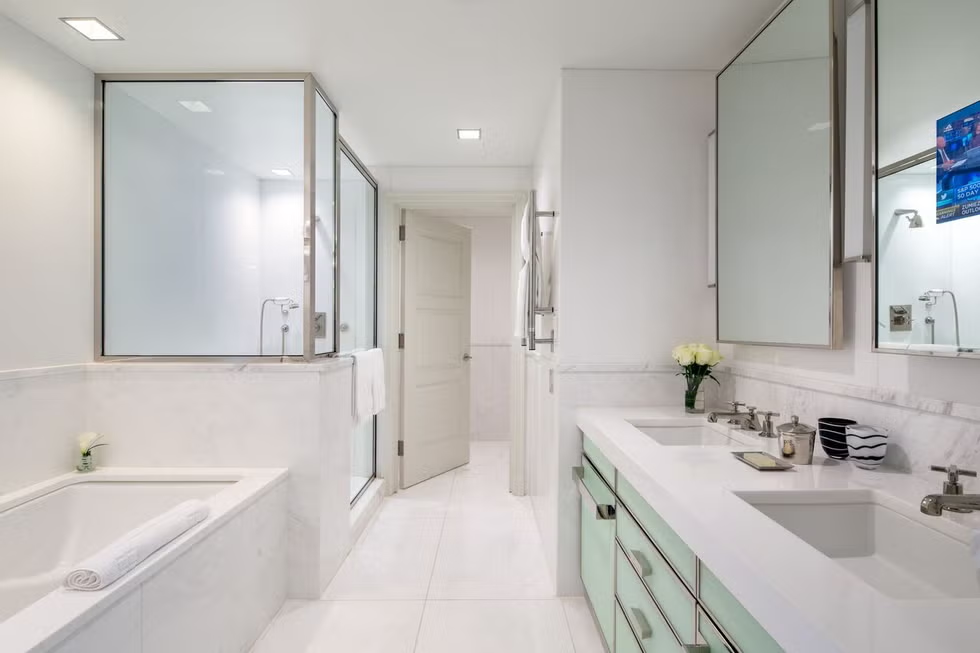
A deep clean targets buildup that weekly tidying misses—grout, mineral deposits, vent covers, and hidden crevices. Plan for about 60–90 minutes for an average bathroom. Start by removing shower curtains/liners for washing (most liners are machine-washable on gentle with a couple of towels) and detach the showerhead if it’s removable to soak in warm vinegar for 30–60 minutes to dissolve limescale.
Top 9 cleaning products for a cleaner 2026 home
Focus on grout and caulk. Spray grout with a bathroom-safe cleaner or oxygen bleach solution (follow label instructions), let it dwell, then scrub with a stiff grout brush. For mold-prone caulk, use a bathroom mildew remover and ventilate well. If caulk is deteriorated or stained through, consider removing and re-caulking—it’s one of the biggest visual upgrades you can make during a deep clean.
Address hardware and nooks. Remove and clean the toilet seat (most modern seats have quick-release fittings). Clean behind the tank, the base of the toilet, and the water supply line. Pull the vanity drawers to vacuum dust and hair. Wash or replace vent covers. If you have glass doors, use a mineral remover on etching and a magic-eraser-style sponge for soap scum. Finish by sealing grout (if applicable) once fully dry to resist future stains.
How to Clean Bathroom Tiles
Tile surfaces (walls and floors) benefit from gentle, pH-appropriate cleaning. For ceramic and porcelain, a mild alkaline cleaner or dish soap solution lifts body oils and soap scum without damaging grout. Avoid harsh acids for routine use; they can erode grout over time. Spray tile walls from the bottom up (to prevent premature runoff lines), let dwell, then scrub with a soft brush or non-scratch pad, and rinse well.
For floor tiles, start with dry debris removal—vacuum or sweep thoroughly, paying attention to edges and corners. Mop using a microfiber mop and a small amount of cleaner; overly soapy water leaves films that attract dirt. Change the water if it gets cloudy. For stubborn stains, spot treat with a paste of baking soda and water, scrub gently, and rinse.
If you have natural stone (marble, travertine, limestone), use a stone-safe, pH-neutral cleaner only. Vinegar, lemon, or acidic products can etch and dull stone. Dry the surfaces with a clean cloth to prevent water spots and minimize mildew. Periodically reseal stone and grout according to manufacturer instructions to keep moisture from penetrating.
How to Clean a Shower and Tub
Start with pre-treatment. Remove bottles, loofahs, and mats. Spray the walls, door/curtain, and tub with a bathroom cleaner formulated for soap scum. Let it sit 5–10 minutes. This softens buildup so you need less elbow grease. For glass doors, apply a dedicated soap-scum or mineral remover if you see white, chalky spots (limescale).
Use the right tools: a long-handled scrubber for walls, a non-scratch pad for the tub, and a toothbrush for corners and around fixtures. Scrub in overlapping circles, focusing on the faucet area, spouts, and door tracks where grime accumulates. Rinse thoroughly with warm water. For shower curtains, machine-wash on gentle with mild detergent and hang to dry; for liners, a quick wipe with vinegar water keeps them clear.
Prevention is everything. After each shower, squeegee walls and doors to remove water. Keep the fan running for 15 minutes after use to reduce humidity. Consider a daily shower spray (store-bought or a DIY diluted vinegar solution for non-stone surfaces) to slow soap scum. Elevate bottles on a rack to avoid slimy rings on ledges, and replace loofahs regularly to reduce bacteria.
How to Clean a Toilet Properly
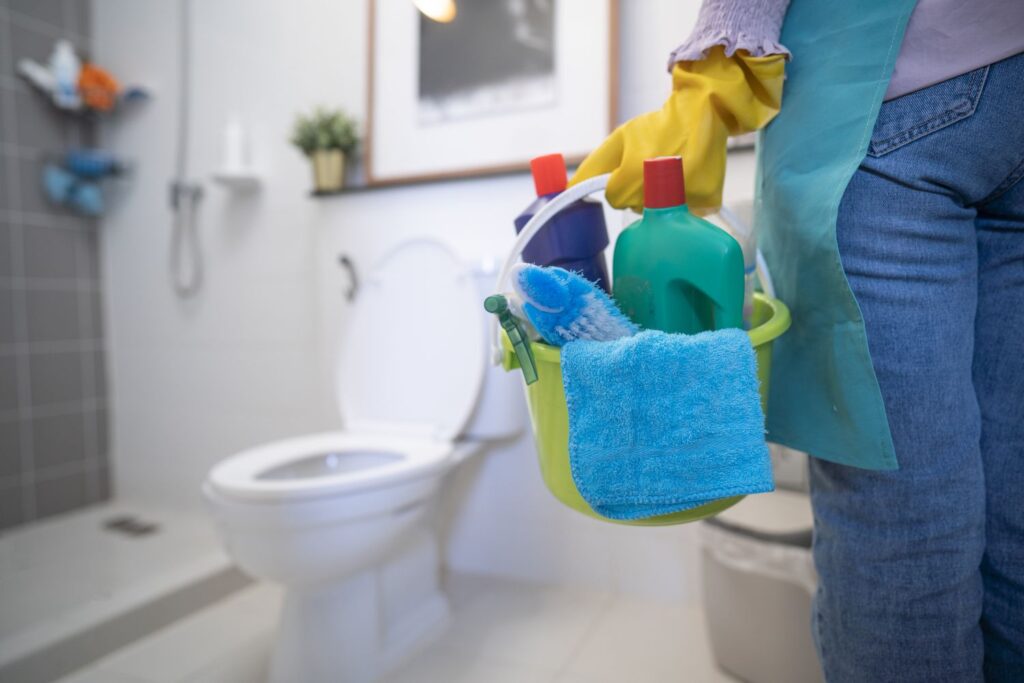
Toilets need a distinct hygiene protocol. Put on gloves and designate specific cloths for the toilet exterior. Start outside: spray the tank, handle, lid, seat (top and underside), hinges, and base. Wipe in this order to avoid cross-contamination: handle → tank → lid → seat top → seat underside → rim and exterior bowl → base and floor area. Switch to a fresh cloth if visibly soiled.
Treat the bowl by applying toilet cleaner under the rim and letting it dwell. Use a toilet brush to scrub under the rim, down the sides, and into the S-trap. For mineral rings, sprinkle pumice stone (toilet-safe) gently or use a descaler; keep surfaces wet to avoid scratching. Flush while rinsing the brush in the clean water stream, then store the brush to dry (propping it between seat and bowl for a few minutes prevents mildew in the holder).
Finish with disinfection of high-touch points like the flush handle and seat. If using a disinfectant, observe the contact time on the label to ensure efficacy (often 3–10 minutes). Keep cleaning products and brushes out of reach of children and pets. For persistent odors, check the wax ring or caulk around the base—leaks can cause smells and need repair.
Easy Bathroom Cleaning Tips
Adopt the 2-minute rule: after using the bathroom, spend two minutes resetting—wipe the faucet and counter, squeegee the shower, and hang towels neatly. These micro-habits drastically cut weekly cleaning time and keep surfaces shining with minimal effort.
Keep a mini-caddy under the sink: a mild all-purpose spray, a glass cloth, a microfiber, and disinfecting wipes. When everything is within reach, you’re more likely to do quick spot cleans. Use color-coded cloths (e.g., blue for glass, green for counters, red for toilet exterior) to prevent cross-contamination and simplify laundering.
Control moisture to prevent mildew. Run the exhaust fan during showers and for 15 minutes afterward, or crack a window. Spread out towels to dry quickly (over-the-door racks help). Replace fabric shower curtains or wash them regularly. A dry bathroom is a clean bathroom.
Bathroom Cleaning Routine
The best routine is the one you’ll stick to. Try this weekly cadence:
- Daily (2–3 min): Squeegee shower, quick counter wipe, tidy items, run fan after showers.
- Weekly (15–25 min): Mirrors, sink/counter, toilet (full), quick shower scrub, spot mop floors.
- Biweekly to Monthly (30–60 min): Deep shower/tub scrub, detail grout spots, descale faucets/showerhead, mop thoroughly, wash mats/liners.
- Quarterly: Vent covers, baseboards, light fixtures, reseal grout (as needed), reorganize drawers/cabinets.
Batch tasks to build momentum. For example, start each weekly clean with spray-and-dwell on the shower and toilet bowl, then handle mirrors and sinks while products work. Use a playlist and timer—it’s amazing how much you can get done in 20 focused minutes.
Customize based on your home: if you have hard water, add a monthly descaling session for glass and fixtures. If multiple people share the bathroom, increase frequency of toilet and floor care. Keep a small whiteboard or digital reminder to track when you last deep-cleaned grout, washed liners, or changed vent filters.
Bathroom Cleaning Hacks

Use dwell time as your secret weapon. Most cleaners need a few minutes to break down grime—spray first, clean elsewhere, then return to wipe with minimal scrubbing. For soap scum, a warm shower pre-rinse (turn on hot water for a minute) can loosen residue before applying cleaner.
Try DIY solutions where appropriate:
- Glass/Mirrors: 1:1 white vinegar and water in a spray bottle (avoid on natural stone).
- General Degreasing: Warm water + a few drops of dish soap.
- Grout Paste: Baking soda + water; apply, let sit, scrub, rinse.
- Limescale Soak: Soak a paper towel with vinegar and wrap around faucet bases; remove after 15–30 minutes and wipe.
Prevent buildup with no-residue choices. Switch to liquid body wash instead of bar soap to reduce soap scum. Use a rinse aid or hydrophobic glass treatment on shower doors to repel water. Keep a squeegee hung in the shower and a scrub sponge in a holder near the tub—visual cues make good habits effortless.
Putting It All Together
With the right order, tools, and habits, bathroom cleaning becomes faster, easier, and more effective. Use the checklist for weekly upkeep, schedule a deep clean monthly or quarterly, and lean on hacks like dwell time, squeegees, and daily 2-minute resets. Your future self will thank you every time you walk into a fresh, bright, and hygienic space.
3 Comments